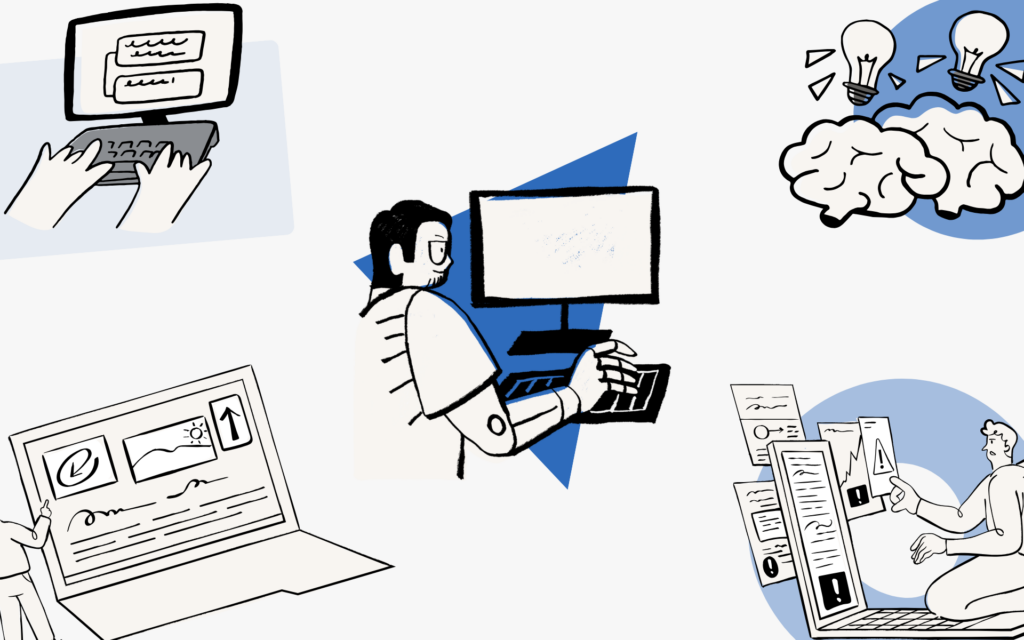
Business development teams at government contracting firms do not lose pursuits because they lack data. Instead, they come up short because they cannot move fast enough from raw data to a pursue/no-pursue decision.
The gap between opportunity identification and when the company can answer key questions gives incumbents room to extend their lead and provides competitors the opening to lock in their advantage. Does the incumbent look vulnerable? Does the firm carry relevant past performance? Do realistic teaming partners exist with the right certifications or set-aside status? For most contractors, manual research, homegrown knowledge, and whoever has time to dig fill that gap.
Technology has not solved the underlying workflow problem, but AI-native tools have begun to compress the timeline in ways that matter to proposal managers, capture leads, and business development professionals across government contracting.
How the Gap Becomes a Loss
Lost time and resources are the costs of a no-bid decision made too late, but a more common failure involves a pursue decision made without enough information and was not stopped at gate reviews. Companies commit a capture manager, spend budget on a Black Hat, pull a business development director into calls, and produce a draft executive summary before anyone has clear answers to why us, why now, and why not them?
The qualification gap opens because the intelligence to do otherwise does not arrive fast enough. By the time a proper competitive analysis surfaces, the opportunity has either passed its pursuit decision point or a proposal team has already moved into motion. Proposal managers inherit underdeveloped competitive context and spend the first two weeks of a response cycle reconstructing intelligence that should have informed the bid decision.
Vendors position AI-native capture intelligence tools as the answer to this problem. That positioning holds up but not always.
Why Architecture Determines Output Speed
Tools that pull directly from USASpending.gov and the System for Award Management (SAM.gov) surface not just who won, but what they won on, when those contracts expire, the set-aside vehicle used, and an incumbent vulnerability assessment. Work that previously required a contracts analyst two to three days of pulling and correlating data now takes 15 minutes.
This matters most for companies without dedicated capture analysts. A vice president of business development at a $50 million firm does not have several staff supporting an intelligence function; they have a business development manager conducting competitive research between outreach calls. Compressing that research cycle from days to minutes expands what a pursuit team can accomplish before the gate review and raises the quality of intelligence that reaches the proposal manager when a pursuit gets the green light.
The second gain comes from teaming partner mapping. When an AI tool surfaces a ranked list of potential partners with relevant award history, the team arrives at its first meeting with a sharper analytical foundation. Tools can structure and query knowledge from prior proposal narratives, capabilities statements, and even institutional knowledge that left with a former program manager. They deliver real value when weighing new opportunities, but only when firms have invested in capturing and organizing that information over time.
What Proposal and Capture Professionals Should Ask Before Changing Any Workflow
Before a company integrates an AI-native intelligence tool into its pursuit process, consider these three questions.
What decisions does this tool support, and at which gate? An intelligence tool optimized for pipeline scanning differs from one built for bid/no-bid gate analysis. Conflating the two produces early-stage volume filtered by late-stage criteria, which generates missed opportunities or over-qualified pursuits that consume proposal resources.
What does the data source cover, and how current is it? Federal procurement data carries latency, so tools drawing from public sources need to be transparent about refresh rates and coverage gaps. An award history six months stale produces a competitive picture that misleads, particularly in categories with high recompete activity or recent agency consolidation.
How does the tool’s output connect to a firm’s existing capture documentation? Intelligence that never reaches the capture plan, the pipeline customer relationship management (CRM) system, or gate review materials creates a new silo. Companies getting the most value have mapped tool output to the required gate review questions, so proposal managers inherit analyzed intelligence on the first day of the response cycle.
The Underlying Discipline Has Not Changed
AI-native intelligence tools compress timelines, surface data at the necessary speed, and give smaller business development functions the analytical coverage that larger firms previously monopolized.
The underlying discipline of capture qualification has not changed. The best tools in this space do not replace the judgment calls that experienced proposal and capture professionals make. They give those professionals better and faster inputs. Defining gate review requirements, team responsibilities, and how intelligence connects to downstream proposal development are decisions belonging to the organization.
The qualification gap is real, and the tools to close it have matured. Companies that map intelligence architecture to their pursuit process before the next recompete cycle write better proposals, build stronger win strategies, and pursue better opportunities.
Author Bio
Charles Sanders is the CEO of PrimeRFP, developer of SCOUT, an AI-native platform that synthesizes federal procurement data into analyzed capture intelligence. Connect with him here on LinkedIn.